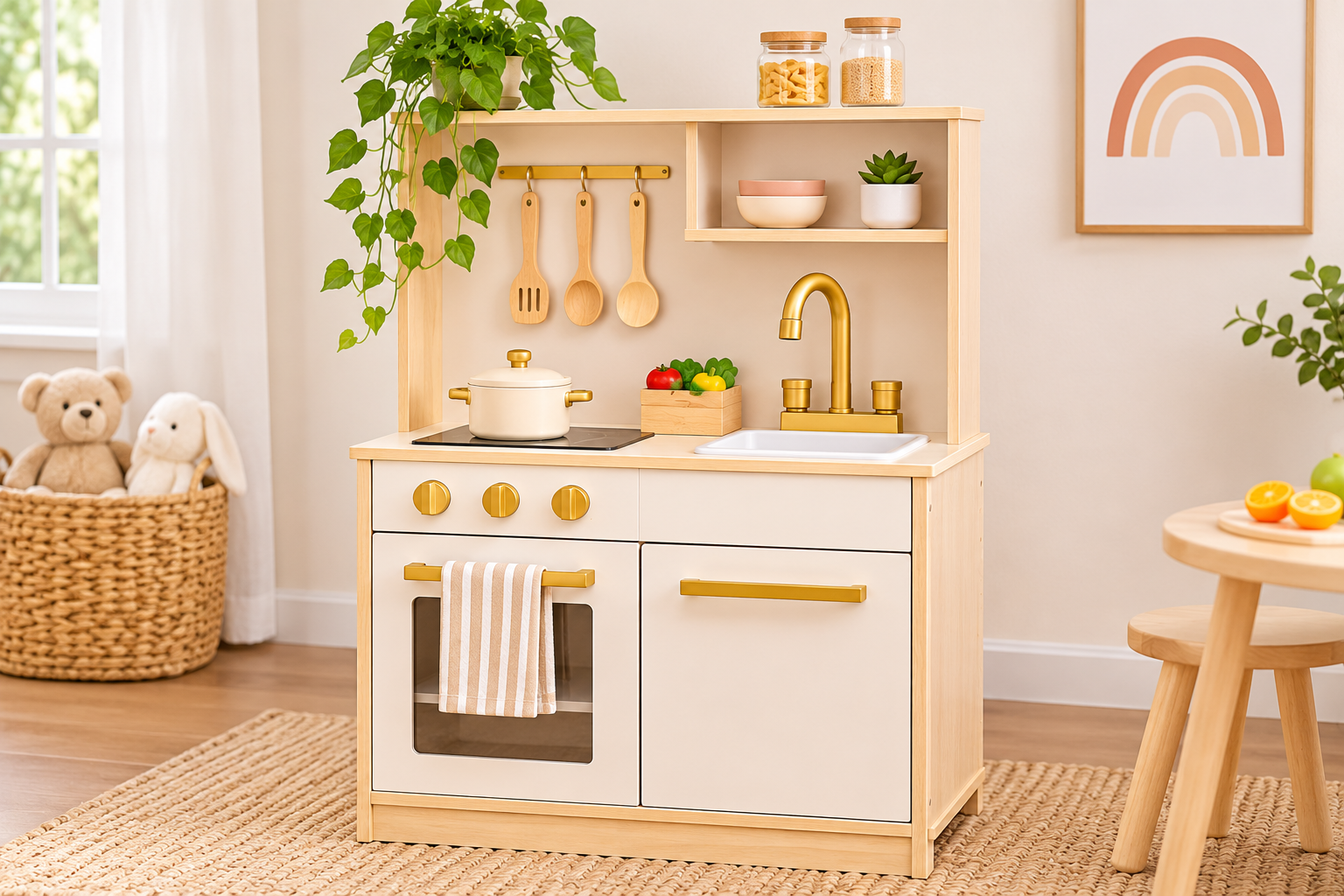
Have you ever watched your child prepare an imaginary dinner or serve pretend coffee to their favorite teddy bear? It may look like simple fun, but these little moments offer opportunities to learn and grow.
Children love copying everyday activities, especially cooking. A pretend play kitchen gives them a space to explore their imagination, practice new skills, and enjoy creative adventures.
The benefits of pretend play go beyond entertainment. Let's explore seven ways play kitchens can support child development.
1. Encourages Creativity and Imagination
A pretend kitchen lets children create their own little world. One day, they're chefs preparing delicious meals, and the next, they're restaurant owners serving imaginary customers.
This type of imaginative play for toddlers encourages creative thinking and storytelling.
Children can invent recipes, create menus, and experiment with different cooking adventures. With no strict rules to follow, they're free to explore ideas and express themselves.
2. Improves Language and Communication Skills
A play kitchen creates natural opportunities for conversation.
Simple phrases like "Dinner is ready!" or "What would you like to eat?" help children practice everyday communication.
When parents or siblings join the fun, kids can learn new words, ask questions, and practice listening.
Parents can also introduce vocabulary related to ingredients, utensils, and cooking activities, making language learning more enjoyable.
3. Develops Social and Emotional Skills
One of the wonderful play kitchen benefits is helping children practice social interactions.
When kids prepare imaginary meals together, they learn about sharing, cooperation, and taking turns.
Playing different roles, such as chef, customer, or parent, also helps them explore other people's feelings.
Preparing a pretend meal for a hungry teddy bear can even encourage caring behavior and empathy.
4. Strengthens Problem-Solving Skills
Pretend cooking comes with small challenges that encourage children to think.
What if there aren't enough plates? How can they prepare dinner with only a few ingredients?
These situations encourage decision-making and creative problem-solving.
A kids play kitchen also introduces activities like sorting, matching, and organizing. Children might arrange vegetables by color or choose the utensils needed for their next imaginary meal.
5. Supports Fine Motor Skill Development
Opening cupboards, turning knobs, stirring pretend soup, and arranging toy food involve small hand movements.
These activities provide opportunities to practice fine motor skills and hand-eye coordination.
A wooden play kitchen with age-appropriate interactive features allows children to grasp, move, and handle different objects.
Practicing these movements can support skills used in everyday activities, including drawing and using utensils.

6. Builds Confidence and Independence
Toddlers love doing things on their own, especially when copying adults.
A pretend kitchen allows children to explore familiar routines independently.
They can decide what to cook, arrange ingredients, and serve imaginary meals without constant instructions.
Making these small choices gives children opportunities to develop independence and confidence.
When parents appreciate their creations, playtime becomes even more rewarding.
7. Introduces Early Learning Concepts
A play kitchen can make learning feel like a game.
Children can count pretend fruits, identify colors, recognize shapes, and organize food items.
Parents can also introduce simple sequences, such as washing vegetables before cooking.
These playful activities help children explore early math concepts, organization, and everyday routines without turning playtime into a formal lesson.
Make Playtime More Meaningful With Tiny Land
A play kitchen is more than just a toy. It's a place where children can imagine, communicate, explore, and practice everyday skills.
At Tiny Land, playtime is about encouraging creativity, curiosity, and meaningful childhood experiences. The brand's thoughtfully designed play kitchens offer little ones a fun environment for imaginative cooking adventures.
Whether your child enjoys baking imaginary cookies or preparing dinner for the family, a play kitchen can make everyday moments more exciting.
Frequently Asked Questions (FAQs)
1. What are the benefits of pretend play for toddlers?
Pretend play encourages creativity, communication, social interaction, problem-solving, and independence. It gives toddlers opportunities to explore everyday situations while having fun.
2. What age is appropriate for a play kitchen?
Many children become interested in play kitchens around ages 2–3. However, the appropriate age depends on the child's development and the manufacturer's age recommendations.
3. How does a pretend play kitchen support child development?
A pretend play kitchen encourages children to imagine different situations, communicate with others, practice hand movements, and explore everyday routines through play.
4. Are wooden play kitchens good for toddlers?
Wooden play kitchens can be a great option for toddlers when they feature sturdy construction, age-appropriate accessories, and child-friendly designs.
5. How can parents make pretend kitchen play more educational?
Parents can ask open-ended questions, introduce new food names, practice counting ingredients, and join imaginary cooking activities to make playtime more interactive.