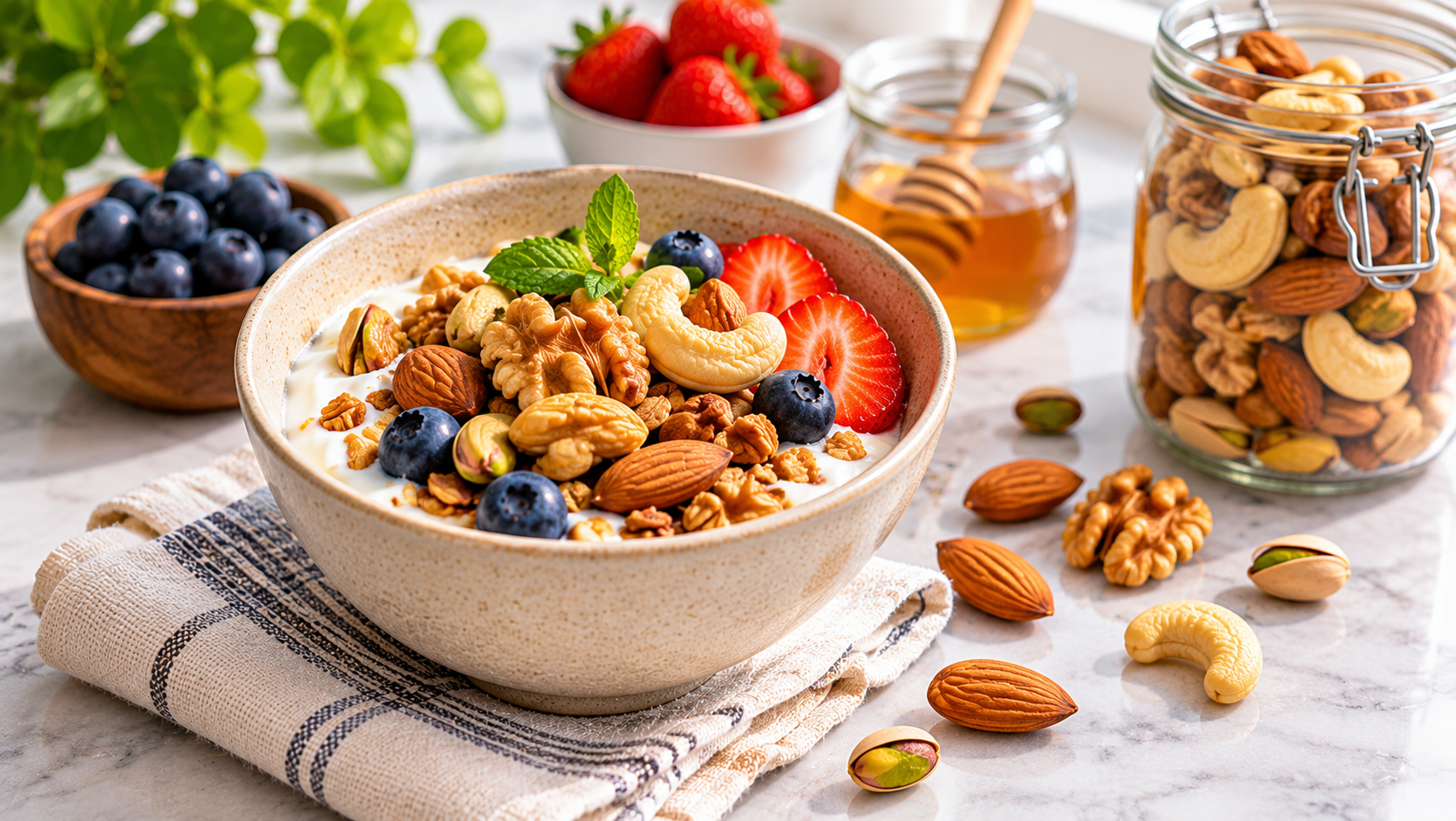
Finding the best nuts for healthy snacking can make your everyday snack routine more enjoyable and nutritious. Whether you love crunchy almonds, buttery cashews, or flavorful pistachios, nuts offer a convenient way to satisfy your hunger between meals.
With so many varieties available, choosing the right nuts can feel confusing. Should you go for raw or roasted nuts? Are salted varieties a good option? Which nuts provide the most protein and fiber?
Here's a simple guide to help you choose delicious, nutritious nuts that suit your taste and lifestyle.
1. Understand the Nutritional Benefits of Nuts
Nuts are naturally packed with nutrients, making them a convenient addition to a balanced diet.
Most varieties provide healthy unsaturated fats, plant-based protein, and important vitamins and minerals.
Some also contain dietary fiber, which supports normal digestion.
Different nuts offer different nutritional benefits:
- Almonds: Provide vitamin E, magnesium, and fiber.
- Walnuts: Contain plant-based omega-3 fatty acids.
- Pistachios: Offer protein, fiber, and potassium.
- Cashews: Provide copper, magnesium, and healthy fats.
- Pecans: Contain unsaturated fats and antioxidants.
Eating a variety of nuts can help you enjoy a broader range of nutrients.
2. Choose Nuts That Match Your Snacking Preferences
The best nuts for healthy snacking should match your personal taste and everyday routine.
If you enjoy crunchy textures, almonds and pistachios are excellent choices.
For a softer, buttery flavor, cashews and macadamia nuts may be more appealing.
Walnuts and pecans work well for people who enjoy rich, earthy flavors.
At Nuts.com, shoppers can explore different nut varieties, making it easier to find options that suit their preferences.
Choosing snacks you genuinely enjoy can help make healthy eating habits more sustainable.
3. Compare Raw and Roasted Nuts
Both raw nuts and roasted nuts can be nutritious options.
Raw nuts have a natural flavor and texture, while roasting creates a crunchier texture and deeper taste.
Dry-roasted nuts are prepared without added oil, while oil-roasted varieties may contain additional fats.
When comparing products, check the ingredient list and nutrition label.
If you prefer simple ingredients, plain raw or dry-roasted nuts can be convenient choices.
The better option ultimately depends on your taste and dietary preferences.
4. Pay Attention to Salt and Added Ingredients
Flavored nuts can be delicious, but their sodium and added sugar content may vary.

Salted nuts can fit into a balanced diet, although people monitoring sodium intake may prefer unsalted or lightly salted varieties.
Before buying healthy nut snacks, review the packaging for:
- Sodium per serving
- Added sugar
- Seasonings and flavorings
- Added oils
- Serving size
Choosing products with ingredients that match your nutritional goals can help you make more informed snacking decisions.
5. Consider Mixed Nuts for More Variety
If you can't decide between almonds, cashews, walnuts, and pistachios, mixed nuts can be a practical solution.
A mixed nut blend combines different flavors, textures, and nutrients in one snack.
They are convenient for work, travel, and busy afternoons.
Nuts.com offers assorted mixed nut options, including roasted and salted varieties.
When choosing a blend, check the ingredient list to see which nuts are included.
Some mixtures also contain dried fruit, chocolate, or additional seasonings that change the nutritional profile.
6. Keep Portion Sizes in Mind
Nuts are nutrient-dense, but they also contain a relatively high number of calories.
A typical serving is approximately one ounce, or 28 grams, although the number of individual nuts varies by type.
Instead of eating directly from a large container, consider preparing smaller portions.
You can also combine nuts with fresh fruit or plain yogurt for a satisfying snack.
Portion awareness helps you enjoy nuts as part of a balanced eating routine without unintentionally consuming more than intended.
7. Choose Quality and Store Nuts Properly
Freshness matters when buying nuts for snacking.
Look for products with clear packaging information, appropriate storage instructions, and a good shelf life.
Nuts contain natural oils that can become rancid when exposed to heat, light, or air for extended periods.
Store them in airtight containers in a cool, dry place.
Refrigeration or freezing can help maintain freshness for longer periods, particularly when buying in bulk.
Enjoy Better Everyday Snacking With Nuts.com
Choosing nutritious snacks doesn't have to be complicated.
By comparing nut varieties, ingredients, preparation methods, and portion sizes, you can find options that fit your preferences.
Nuts.com offers a selection of almonds, walnuts, pistachios, cashews, and mixed nuts for different snacking occasions.
Whether you're preparing an afternoon snack or stocking your pantry, the right nuts can add flavor, crunch, and valuable nutrients to your everyday routine.
Frequently Asked Questions (FAQs)
1. What are the best nuts for healthy snacking?
Almonds, walnuts, pistachios, cashews, and pecans are all nutritious choices. The best option depends on your taste preferences and nutritional needs.
2. Is it healthy to eat nuts every day?
For most people without nut allergies, moderate portions of nuts can be part of a healthy daily diet. They provide unsaturated fats, protein, and other important nutrients.
3. Are raw nuts healthier than roasted nuts?
Both can be nutritious. Dry roasting generally preserves much of the nutritional value, although preparation methods and added ingredients can affect the final product.
4. Which nuts are highest in protein?
Among common tree nuts, almonds and pistachios are relatively high in protein, each providing approximately six grams per one-ounce serving.
5. How should I store nuts to keep them fresh?
Keep nuts in airtight containers away from heat, moisture, and sunlight. Refrigerating or freezing them can help extend their freshness.