Finding the best water filter for home use can make everyday drinking water more convenient and enjoyable. Whether you want to improve the taste of your tap water, reduce specific unwanted substances or upgrade your kitchen, choosing the right filtration system is important.
With so many options available, from countertop filters to advanced reverse osmosis systems, knowing where to start can feel confusing.
Here's a practical guide to choosing a water filter that suits your household, kitchen space and budget.
1. Understand Your Household's Water Needs
Before purchasing a filter, think about why you need one.
Some homeowners want to reduce the chlorine taste or smell of tap water, while others are interested in filtration for particular contaminants.
Consider your household size, daily drinking water consumption and available kitchen space.
If you have concerns about water quality, review your local water supplier's information or arrange appropriate testing.
UK mains tap water is regulated and generally safe to drink, so additional filtration isn't essential for every household.
2. Explore Different Types of Water Filters
Understanding the available options makes choosing a home water filter easier.
Three common types include:
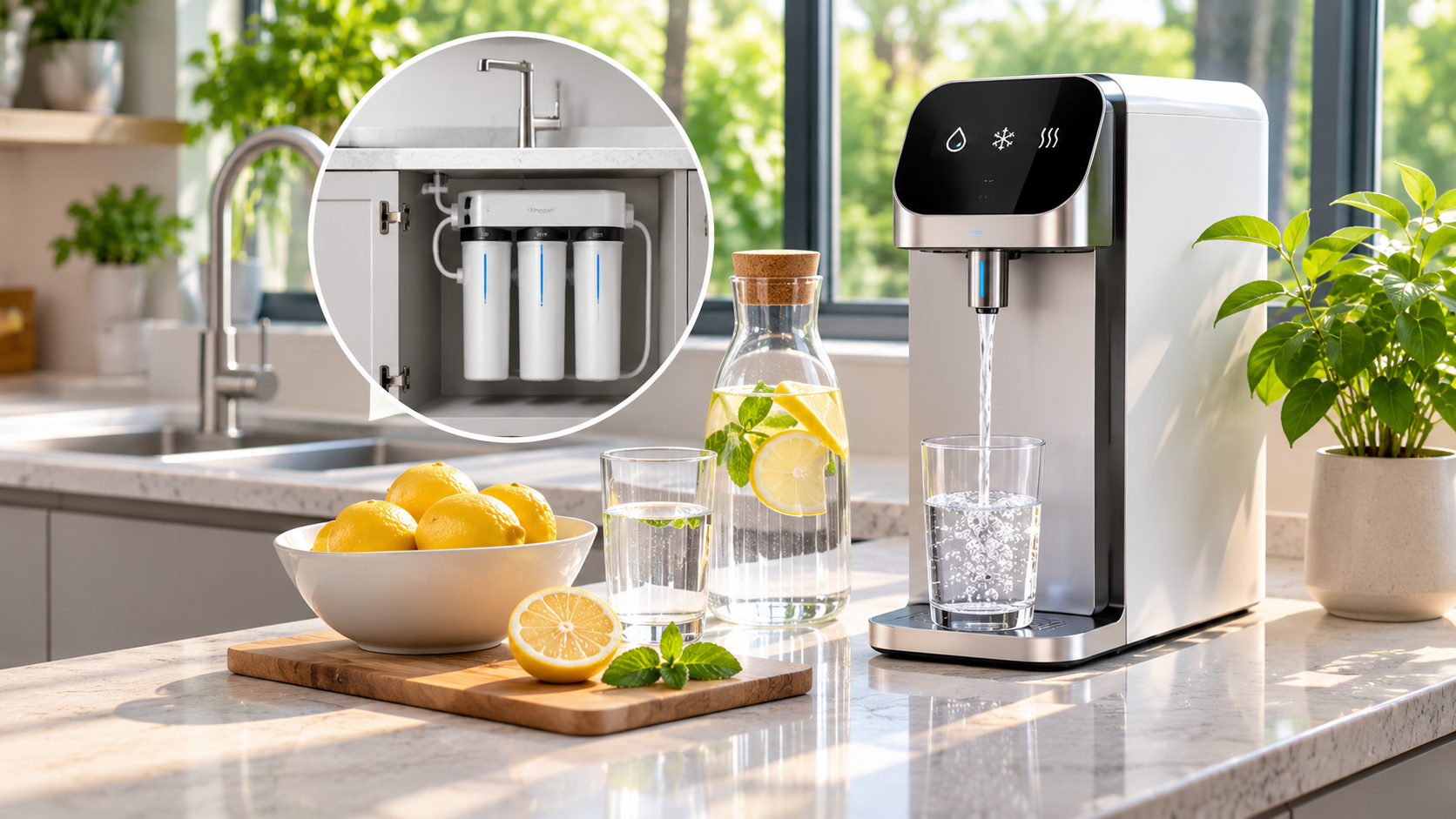
- Under-sink filters: Installed beneath the kitchen sink to provide filtered water through a connected tap.
- Countertop filters: Positioned on the worktop, offering an accessible filtration option.
- Reverse osmosis systems: Use a membrane and additional filtration stages to reduce a range of dissolved substances.
Each system has different installation requirements and filtration capabilities.
Waterdrop offers under-sink, countertop and reverse osmosis models for different household preferences.
3. Check Filtration Performance
Not every filter removes the same substances.
Some filters are primarily designed to reduce chlorine-related tastes and odours. Others target additional contaminants.
A reverse osmosis water filter can reduce many dissolved substances, depending on its design and tested performance.
Before purchasing, check which contaminants the specific model is certified to reduce.
Look for relevant independent testing and certification details, rather than relying only on general claims.
The right filtration system should address your actual water quality concerns.
4. Consider Your Kitchen Space
Kitchen layout is an important factor when choosing a water filter.

An under sink water filter may suit homeowners who prefer keeping their worktops clear.
However, you'll need to check the available cabinet space and plumbing requirements.
A countertop water filter may be more suitable if you prefer an accessible system that doesn't require permanent installation.
Some countertop models simply need power and manual water filling, while others connect to a tap.
Always review the dimensions and installation instructions before buying.
5. Look at Filter Replacement and Maintenance
Every filtration system requires maintenance to keep working as intended.
Filter replacement schedules vary depending on the model, water conditions and usage.
Before choosing a system, consider:
- Replacement filter availability
- Recommended replacement intervals
- Cost of replacement cartridges
- Cleaning requirements
- Ease of maintenance
Some Waterdrop systems include filter-life indicators to help users monitor replacement needs.
Following the manufacturer's maintenance instructions is essential for consistent filtration performance.
6. Think About Convenience and Extra Features
Modern drinking water filtration systems offer features beyond basic water filtering.
Depending on the model, you may find instant hot water, chilled water dispensing, digital displays or compact tankless designs.
These features can be useful for busy households.
For example, a countertop dispenser with hot water functionality may simplify preparing tea or other hot drinks.
Waterdrop offers selected models with hot-and-cold dispensing and smart monitoring features.
Choose features you'll genuinely use rather than paying extra for unnecessary functions.
7. Compare Long-Term Costs
The purchase price is only one part of owning a water filtration system.
When comparing products, consider installation, electricity consumption, replacement filters and ongoing maintenance.
Reverse osmosis systems may also produce wastewater during filtration, so check the model's efficiency information.
A less expensive system isn't always the most economical option over several years.
The best water filter for home use should provide suitable filtration while fitting your long-term budget.
Find the Right Water Filter With Waterdrop
Choosing a water filter becomes easier when you understand your household's requirements.
By comparing filtration performance, installation, maintenance and everyday convenience, you can find a system that complements your home.
Waterdrop UK offers a selection of countertop, under-sink and reverse osmosis filtration systems for different kitchen layouts and preferences.
Whether you're looking for a compact everyday filter or a more advanced solution, choosing carefully can help make filtered water a convenient part of your routine.
Frequently Asked Questions (FAQs)
1. What is the best water filter for home use in the UK?
The best choice depends on your water quality concerns, household size, kitchen space and budget. Compare independently verified filtration performance and maintenance requirements before buying.
2. Is filtered water better than tap water?
UK mains tap water is generally safe to drink. Filtration may improve taste or reduce specific substances, depending on the filter and its tested capabilities.
3. What is the difference between an under-sink and countertop water filter?
Under-sink systems connect to plumbing beneath the sink, while countertop models sit on the worktop. Installation and filtration features vary between products.
4. How often should I replace my water filter?
Replacement intervals depend on the manufacturer, model and water usage. Follow the product's recommended schedule to maintain filtration performance.
5. Is a reverse osmosis water filter worth buying?
A reverse osmosis system may be worthwhile if you want filtration that targets a broader range of dissolved substances. Consider installation, running costs and your actual water quality needs.