Finding the best wooden play food for your child can make pretend playtime more exciting, creative, and meaningful. Whether your little one loves preparing imaginary meals, running a pretend grocery store, or serving dinner to stuffed animals, wooden food toys offer plenty of opportunities for hands-on fun.
With so many play food sets available, choosing the right one isn't always easy. From colorful fruits and vegetables to realistic cooking accessories, there are several things worth considering.
Here's a simple guide to finding wooden play food that matches your child's age, interests, and everyday play activities.
1. Choose Age-Appropriate Play Food
Before buying any wooden play food, check the recommended age on the packaging.
Younger children need toys that are easy to hold and appropriate for their developmental stage.
Look for smooth surfaces, rounded edges, and pieces that are suitable for your child's age.
Avoid toys containing small detachable parts if your child is still likely to put objects in their mouth.
Remember that not every wooden play food set is suitable for toddlers. Always follow the manufacturer's age and safety recommendations.
2. Check Material Quality and Safety
Quality matters when choosing toys that children will handle regularly.
Well-made wooden play food sets should have smooth finishes, sturdy construction, and securely attached components.
Consider these features:
- Smooth edges and surfaces
- Durable wooden construction
- Child-appropriate paints and finishes
- Securely attached decorative elements
- Clear safety and age recommendations
Wooden toys aren't automatically safer than plastic alternatives. Their safety depends on the design, materials, construction, and intended age group.
Choosing thoughtfully made toys helps create a more comfortable play experience.
3. Look for Realistic Food Designs
Children love copying activities they see in everyday life.
Realistic pretend play food allows them to explore familiar experiences such as grocery shopping, preparing breakfast, and making dinner.
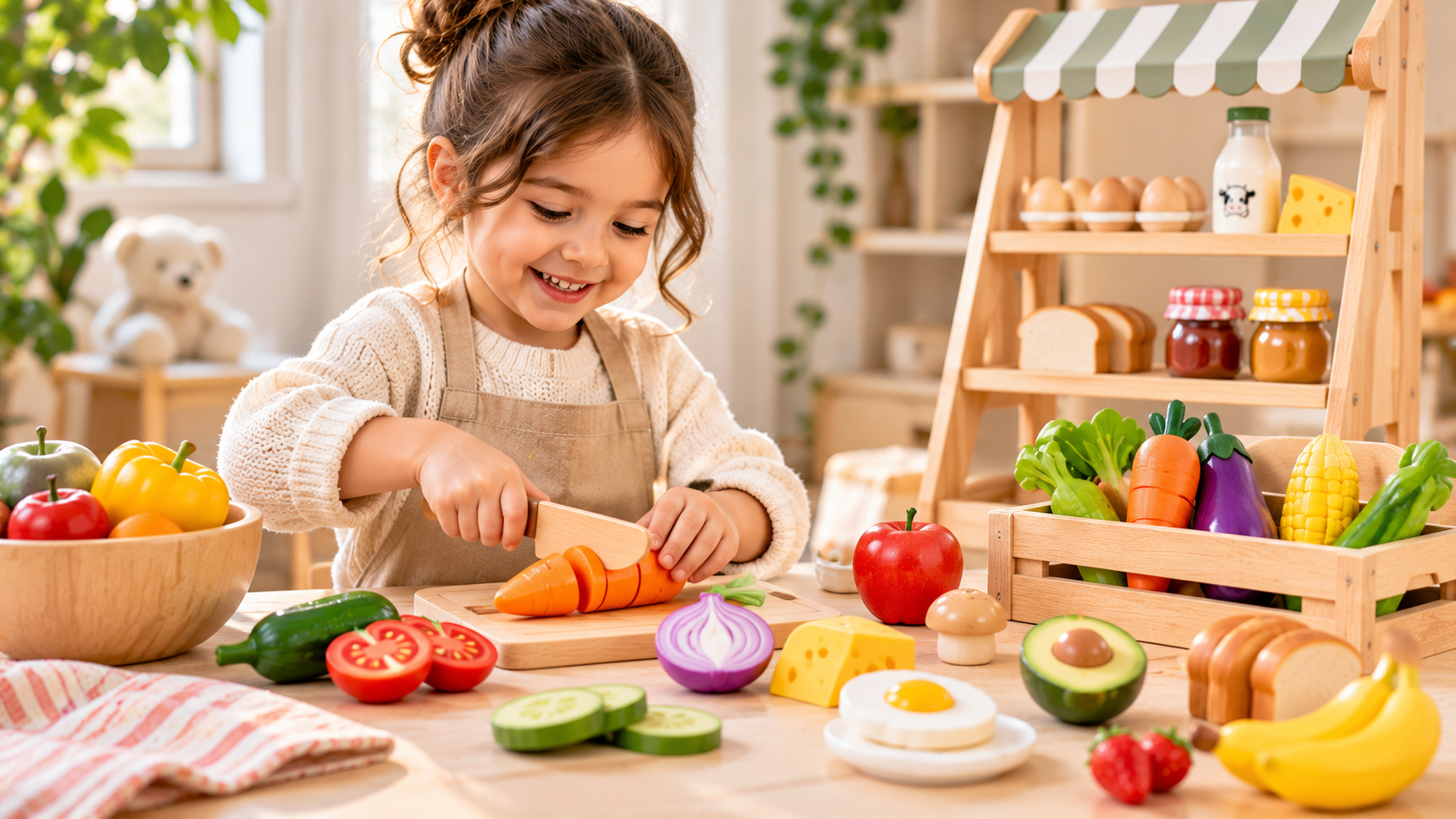
Consider sets featuring recognizable items like apples, carrots, bread, eggs, and vegetables.
These toys can encourage conversations about food names, colors, shapes, and everyday routines.
For example, parents can ask children to identify different fruits or organize pretend groceries into categories.
Simple activities like these make playtime more interactive.
4. Consider Interactive Cutting Food Toys

Interactive toys can add another layer of excitement to pretend cooking.
Some play food for toddlers includes pieces that connect and separate using child-friendly fastening systems.
Children can pretend to slice vegetables, prepare sandwiches, or serve meals using toy utensils.
These activities provide opportunities to practice hand-eye coordination and fine motor movements.
Tiny Land offers wooden cut-and-play food toys that encourage children to explore familiar kitchen activities through imaginative play.
Always supervise play according to the toy's age recommendations.
5. Choose Sets That Encourage Imagination
The best wooden play food should offer more than one way to play.
A collection of pretend fruits, vegetables, and other groceries can inspire countless activities.
Children might create a restaurant, organize a farmers market, or prepare imaginary meals for their families.
You can also encourage simple games such as:
- Sorting food by color
- Counting pretend fruits
- Creating a shopping list
- Preparing imaginary breakfast
- Playing restaurant with siblings
These activities encourage creativity, communication, and opportunities for early learning.
6. Think About Storage and Organization
Play food collections often include several individual pieces, making storage important.
Look for sets that come with baskets, storage boxes, or organizing accessories.
A dedicated storage area can make cleanup easier and keep toys accessible.
For example, Tiny Land offers wooden play food options with storage racks that can help organize pretend groceries.
Encouraging children to return toys after playtime can also introduce simple organizational habits.
Choose storage solutions that fit comfortably in your child's play area.
7. Pick Play Food That Grows With Their Interests
Children's play preferences change as they grow.
A younger child might enjoy naming fruits and vegetables, while an older child may prefer running an imaginary grocery store.
Versatile pretend food toys can support different types of activities over time.
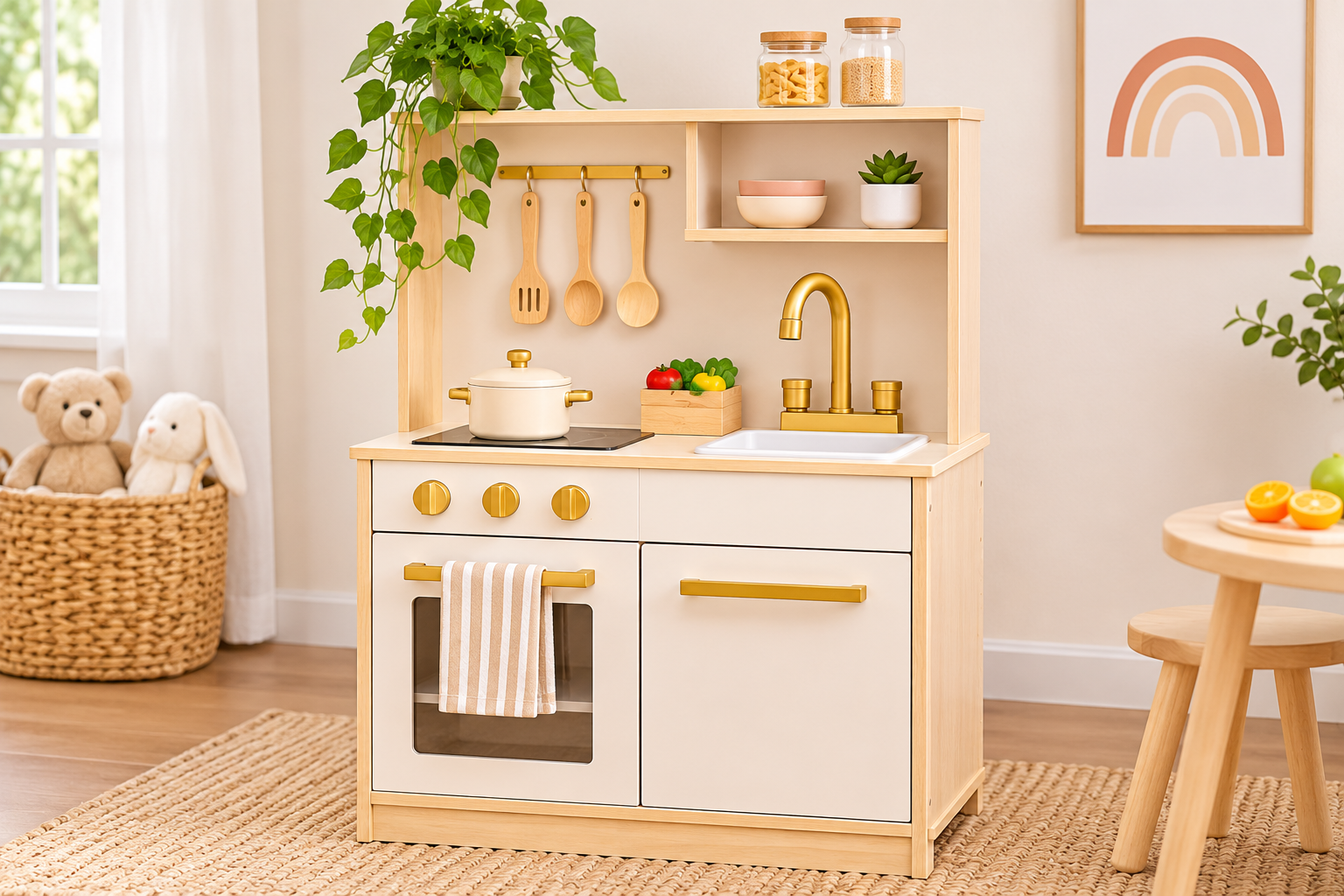
Consider sets that work with existing play kitchens, shopping baskets, and pretend cooking accessories.
Tiny Land offers options ranging from wooden cutting food toys to organic-inspired grocery collections.
Choosing a versatile set gives children more opportunities to create new playtime adventures.
Make Pretend Play More Fun With Tiny Land
Wooden play food can turn ordinary playtime into an opportunity for creativity, storytelling, and hands-on exploration.
By considering safety, age suitability, material quality, interactive features, and storage, parents can find toys that complement their child's interests.
Tiny Land offers a variety of wooden play food sets designed for imaginative kitchen activities.
Whether children are preparing pretend meals or organizing their own little grocery store, the right play food can make everyday playtime more enjoyable.
Frequently Asked Questions (FAQs)
1. What is the best wooden play food for kids?
The best option depends on your child's age and interests. Choose age-appropriate sets with sturdy construction, smooth finishes, and interactive features that encourage imaginative play.
2. Is wooden play food safe for toddlers?
Wooden play food can be safe when properly designed for the child's age. Always check safety recommendations, small parts, and product construction before purchasing.
3. What age is best for wooden play food?
Age recommendations vary by product. Some sets are suitable for children aged 2 and older, while others are recommended for ages 3 and up.
4. How do you clean wooden play food toys?
Wipe wooden toys with a slightly damp cloth and allow them to air-dry. Avoid soaking them in water unless the manufacturer specifically recommends it.
5. Can wooden play food help children learn?
Yes. Pretend food activities provide opportunities to practice counting, sorting, communication, imaginative thinking, and fine motor movements through play.